I had the great pleasure, for the second time, to be a guest on Hoosier History Live today. The only radio program in the nation dedicated to state history that takes calls from listeners. Carried on WICR 88.7 (on the campus of the University of Indianapolis) the program tackles a new topic every week.
The first time I was on the show, the topic was interesting facts about Indiana's history. My contribution was to discuss some of the communities that disappeared (chief cause, the creation of reservoirs), the final resting place of Uncle Tom (yes, the Uncle Tom), the "anti-Dillinger" police post in Goshen (always a favorite), and the origins of the name "Wakarusa" (well, maybe!).
But today's show focused on Prohibition. As I often tell students, it is a topic that is near and dear to my professional heart. So, I got to talk a bit about my first book, and Book 3 as well (as the State Museum is about to host the traveling exhibit from the National Constitution Center). That I also got to see an old graduate school friend (who now works at the Indiana State Museum) was just icing on the proverbial cake.
So, thank you Nelson and Molly, for putting this show on each and every week. Next week's show, in which the guest is my dissertation adviser, Prof. James Madison, who is going to talk about his new book, Hoosiers, is sure to be a treat for listeners!
Showing posts with label Mainline. Show all posts
Showing posts with label Mainline. Show all posts
Saturday, September 6, 2014

Wednesday, October 30, 2013
All Hallow's Eve
While walking across campus yesterday, I ran into a colleague who asked me where I was going. I told her that I was off to teach a section of US History I (roughly 1492-1876, give or take). She asked me what books I used for the course, and though I started to tell her, stopped me shortly after I uttered "Morgan's Meaning of Independence." As it turned out, she had been a graduate student under Prof. Edmund S. Morgan, who passed away earlier this year at the age of 97. After telling me that she was so happy that I was using one of his books, as well as a few stories about what a wonderful mentor he was, we parted ways, and I started thinking about writing a post about Morgan (as she also told me she was going to a memorial service in his honor this coming weekend) about his influence on me as an historian.
But then the annual "Halloween Controversy" reared its head. As a child, my family always celebrated Halloween. By celebrate, I of course mean wearing costumes, carving pumpkins into Jack-O-Lanterns, and eating candy....and then eating more candy! What my parents didn't confiscate that is. It would be several years after I stopped "trick or treating" that I discovered that my father and I apparently had liked some of the same types of candy for years....but interestingly enough, those had been the ones that had always been confiscated when I was younger! At the same time, we lived in an area where there were many friends and neighbors who did not, often for religious reasons. One neighborhood family, in particular, once referred to it as "celebrating the devil" or some such. That statement aside, we all still played together the next day (and maybe even shared some candy), we just didn't walk around in costume together the night before.
And yet, there it was. All over social media these past few days, people posting pictures of themselves or their kids in costume, talking about parties they had or would attend, but also included in the mix of posts were some about how some friends weren't celebrating Halloween, or had stopped doing so, or who didn't understand why people used Halloween as an excuse to dress a certain way. Now, the point of this post isn't to get into an argument over whether or not Christians should or should not celebrate or take part in Halloween activities (if you want to read something from both sides of that argument you can take a look at this and this). It isn't even to get into the history of All Hallow's Eve, which you can read about here (and while you are at it, remember that the day after Halloween is All Saints Day). Rather, it is ponder ways in which Christians can learn from secular culture even while they engage it.
To do that, I return to Morgan. I am very thankful that a little over two decades ago I decided to take the first half of the US Survey (the very class I talked to my colleague about) as a freshman at Indiana University. Prof. Bernard Sheehan was my first college history professor, and he opened my eyes to what History could be and (and that it might even be a profession). He also introduced me to the work of Gordon Wood and Edmund Morgan (amongst other wonderful historians), and for that I am thankful. Over the years, I think I've read every book Wood and Morgan have written (at least once), and I've also learned more about both men (indeed, I literally bumped into Prof. Wood at a convention, and was so "star struck" that I could only mutter an apology). In the case of Morgan, one of my favorite quotes of his came from an interview in 2006, in which he talked about his conversion to being a "Calvinist atheist."
Those two words aren't often combined together, nor would they make much sense to some either in or outside of the Church. But in Morgan's story, it makes perfect sense. In 1938, after studying under Perry Miller (who shared both his interest in the Puritans as well as his atheism), Morgan found himself in Germany (while doing some post graduate work in Europe), and quite literally just a few feet from Adolph Hitler. It was, while being in the presence of the Nazis, that Morgan suddenly "came face to face with evil" and understood it as such, even before the world knew of such things as the Holocaust or extermination camps, and on another level, the Puritan theology he had studied under Miller suddenly made a great deal of sense. There was evil in the world, and the same people who could accomplish so many good things, were also capable of doing horrible wrongs.
Morgan, the atheist, was also a first rate historian, who probably did more than anyone else (save for perhaps his mentor Miller) to salvage not just the reputation but also the Calvinistic/Reformed theology of the Puritans for future generations. And yet, because he was an atheist, there could be some Christians who would refuse to read him (even, in the case of this historian, Morgan's writings kept me from all sorts of "derange[d] . . . fairy tales" -- to borrow the words of historian Oscar Handlin, written about the work of another practitioner of the historian's craft --along the way.
Professor Morgan may only be "sainted" in the Cathedral of Clio come All Saints Day, but there is every reason to celebrate what he accomplished professionally, and for Christians to find much that is good in his scholarship. Could Christians then, find something redeemable even in Halloween? Maybe. Perhaps it will never revert to All Hallows Eve. Perhaps there are all sorts of problems with it from a nutritional stand point (candy is very tasty, and thus good, but to much of it is very bad as well), or a consumerism stand point (we have to buy costumes, and decorations, and this and that...and surely the money could be better spent on other things), and maybe even a moral ones (I won't speak for others, but there are certainly some costumes I'd never allow/hope that my kids would never wear). There are, in other words, all sorts of reasons one could think to be "against" it. And if that is where you are, I'm not going to say you are wrong. There may even be counter arguments for those who have arguments in its favor (such as, it is just a bit of fun. Or that in dressing up and giving out candy/getting it you are hard pressed to argue that people are really worshiping the devil or consecrating chocolate bars to evil. Or even, to borrow from/paraphrase C.S. Lewis, that it is good to see make believe monsters, so that we might be better prepared to fight real ones). But I'd assert that for Christians, whether inside or outside of the Mainline, there are also much bigger cultural issues facing our nation and world than Halloween. And maybe, rather than focusing on this holiday and arguing over it, we should all turn our attention to those wider issues of much greater importance. After all, it is largely because of the work of a Calvinist atheist that we remember the Puritans for being more than just "kill joys" and people who tried witches.
But then the annual "Halloween Controversy" reared its head. As a child, my family always celebrated Halloween. By celebrate, I of course mean wearing costumes, carving pumpkins into Jack-O-Lanterns, and eating candy....and then eating more candy! What my parents didn't confiscate that is. It would be several years after I stopped "trick or treating" that I discovered that my father and I apparently had liked some of the same types of candy for years....but interestingly enough, those had been the ones that had always been confiscated when I was younger! At the same time, we lived in an area where there were many friends and neighbors who did not, often for religious reasons. One neighborhood family, in particular, once referred to it as "celebrating the devil" or some such. That statement aside, we all still played together the next day (and maybe even shared some candy), we just didn't walk around in costume together the night before.
And yet, there it was. All over social media these past few days, people posting pictures of themselves or their kids in costume, talking about parties they had or would attend, but also included in the mix of posts were some about how some friends weren't celebrating Halloween, or had stopped doing so, or who didn't understand why people used Halloween as an excuse to dress a certain way. Now, the point of this post isn't to get into an argument over whether or not Christians should or should not celebrate or take part in Halloween activities (if you want to read something from both sides of that argument you can take a look at this and this). It isn't even to get into the history of All Hallow's Eve, which you can read about here (and while you are at it, remember that the day after Halloween is All Saints Day). Rather, it is ponder ways in which Christians can learn from secular culture even while they engage it.
To do that, I return to Morgan. I am very thankful that a little over two decades ago I decided to take the first half of the US Survey (the very class I talked to my colleague about) as a freshman at Indiana University. Prof. Bernard Sheehan was my first college history professor, and he opened my eyes to what History could be and (and that it might even be a profession). He also introduced me to the work of Gordon Wood and Edmund Morgan (amongst other wonderful historians), and for that I am thankful. Over the years, I think I've read every book Wood and Morgan have written (at least once), and I've also learned more about both men (indeed, I literally bumped into Prof. Wood at a convention, and was so "star struck" that I could only mutter an apology). In the case of Morgan, one of my favorite quotes of his came from an interview in 2006, in which he talked about his conversion to being a "Calvinist atheist."
Those two words aren't often combined together, nor would they make much sense to some either in or outside of the Church. But in Morgan's story, it makes perfect sense. In 1938, after studying under Perry Miller (who shared both his interest in the Puritans as well as his atheism), Morgan found himself in Germany (while doing some post graduate work in Europe), and quite literally just a few feet from Adolph Hitler. It was, while being in the presence of the Nazis, that Morgan suddenly "came face to face with evil" and understood it as such, even before the world knew of such things as the Holocaust or extermination camps, and on another level, the Puritan theology he had studied under Miller suddenly made a great deal of sense. There was evil in the world, and the same people who could accomplish so many good things, were also capable of doing horrible wrongs.
Morgan, the atheist, was also a first rate historian, who probably did more than anyone else (save for perhaps his mentor Miller) to salvage not just the reputation but also the Calvinistic/Reformed theology of the Puritans for future generations. And yet, because he was an atheist, there could be some Christians who would refuse to read him (even, in the case of this historian, Morgan's writings kept me from all sorts of "derange[d] . . . fairy tales" -- to borrow the words of historian Oscar Handlin, written about the work of another practitioner of the historian's craft --along the way.
Professor Morgan may only be "sainted" in the Cathedral of Clio come All Saints Day, but there is every reason to celebrate what he accomplished professionally, and for Christians to find much that is good in his scholarship. Could Christians then, find something redeemable even in Halloween? Maybe. Perhaps it will never revert to All Hallows Eve. Perhaps there are all sorts of problems with it from a nutritional stand point (candy is very tasty, and thus good, but to much of it is very bad as well), or a consumerism stand point (we have to buy costumes, and decorations, and this and that...and surely the money could be better spent on other things), and maybe even a moral ones (I won't speak for others, but there are certainly some costumes I'd never allow/hope that my kids would never wear). There are, in other words, all sorts of reasons one could think to be "against" it. And if that is where you are, I'm not going to say you are wrong. There may even be counter arguments for those who have arguments in its favor (such as, it is just a bit of fun. Or that in dressing up and giving out candy/getting it you are hard pressed to argue that people are really worshiping the devil or consecrating chocolate bars to evil. Or even, to borrow from/paraphrase C.S. Lewis, that it is good to see make believe monsters, so that we might be better prepared to fight real ones). But I'd assert that for Christians, whether inside or outside of the Mainline, there are also much bigger cultural issues facing our nation and world than Halloween. And maybe, rather than focusing on this holiday and arguing over it, we should all turn our attention to those wider issues of much greater importance. After all, it is largely because of the work of a Calvinist atheist that we remember the Puritans for being more than just "kill joys" and people who tried witches.
Monday, October 14, 2013
Cherry Picking
This past weekend, my son got called for "cherry picking" at his soccer game. He had beaten the defense and happened to be in the right place at the right time when a teammate kicked the ball his way. The goal he scored was rescinded by the opposing coach, over the protest of my son's coach (even though goals and wins/losses only matter in the spring tourney), all to the dismay of my son (who was being congratulated by his teammates and was confused by the call). To add to the situation, what my son did wasn't in technical violation of the rules (as his coach pointed out) and the goal was only scored because the other team's defender (the boys are still young enough where there is no goalie) had abandoned his post to go where the action was.
In the non-sporting, academic world, cherry picking isn't about having a player near the other team's goal or basket, it is when we pick what we want to talk about to the neglect of other things in a given book or article. Out of the many articles and posts I've read in the past week or two, these are the ones I'm going to talk about, in the context of The Mainline and the state of American Christianity and Religion.
The first is over Carol Howard Merritt's post in The Christian Century from September, in which she argues against the continued use of the name "mainline" to describe the Seven Sisters. It is a brief post and is one that is focused on making an argument for a recasting of those denominations as a sort of Progressive/liberal religious force, abandoning "mainline" (not because they are no longer the majority denominations, as I argue in my book) but rather because the term seems to her to describe people who "hang out at the Country Club and eat cucumber sandwiches in fancy hats." Her post has generated some interest in the possibility of finding a new name to classify the Seven Sisters (see the Religion News Service article here if you'd like to vote and/or read the commentary/discussion).
While such a discussion is interesting and fun (even if it isn't likely to catch on), there are a few problems with Merritt's post. The first is that the term "mainline" predates sociologist E. Digby Baltzell's use of it in talking about "upper crust" Philadelphia society. The reason it got attached to the Seven Sisters to begin with (as I discuss in my book) is because the Federal Council of Churches was organized in Philadelphia some fifty years before Baltzell's piece was even written. The mainline is older than the 1950s, it has a history (and yes baggage), but there is power in the name and to abandon it, to allow it to fall into disuse, is not something to be done lightly.
The second problem is that Merritt's argument is based on two additional assumptions: That by accepting the term "mainline" the Seven Sisters are "white-washes our influences" and that keeping it somehow limits the Sisters from answering the call to "who we want to become." As to the notion of "white-washing," Merritt accurately points out that it could be construed that the Seven Sisters have only been influenced by white theologians (more precisely, dead white males), whereas she points to a wide a diversity (whites, blacks, Hispanic, men, women, Catholic, and Protestant) of influences on theological trends within the Seven Sisters. The problem here is two-fold: First, the notion of white-washing is somewhat the creation of the Seven Sisters themselves (and to a larger degree, the Federal/National Council of Churches), and somewhat missing the point that when the organization was first created by those denominations, for a wide variety of historical reasons (including racism and sexism to be sure), it was the creation of largely white males. While such a history does not preclude change to be sure ("who we want to become"), as I read Merritt here, what she seems to be advocating is not just a move away from the past but all most a rejection of it. In short, taking this line to its extreme, one might see the repudiation of much good along with much of what one might disagree with. Institutions without moorings (or a firm foundation) are not likely to stand the test of time, even with a name change. And while the list of theologians are impressive and make for a strong argument, they are not the whole story nor are they the only theologians who deserve mention and consideration.
Indeed, Merritt's argument presupposes that the Seven Sisters are only home to liberals (both theological and political) since the 1960s. That isn't backed up by the evidence, even today you can find theological diversity within the Seven Sisters, perhaps most obviously at the local level. And that gets at her second point ("who we want to become"). Which "who" is Merritt talking about? The conservative, evangelical United Methodist congregation in Indiana? The liberal Episcopalian church in New York City? The Presbyterian Church (USA) in Texas? It assumes a consensus within and between denominations that is largely a fiction. It is a useful fiction in many respects (esp. for denominational leaders) but it is a fiction nevertheless. Just like no one voted to start calling the Seven Sisters, the founders of today's National Council of Churches, the Mainline to begin with, no one (even those taking part in the Religion News Service poll) is going to be able to craft a new label that really captures who those denominations are today. The diversity that Merritt alludes to (and celebrates) in her post insures that. Furthermore, while those churches and denominations aren't likely to disappear (let alone the Church--a topic I'll return to later in the week perhaps), the Seven Sisters do have a problem with "median age" that a name change or re-branding isn't likely to change either.
In the non-sporting, academic world, cherry picking isn't about having a player near the other team's goal or basket, it is when we pick what we want to talk about to the neglect of other things in a given book or article. Out of the many articles and posts I've read in the past week or two, these are the ones I'm going to talk about, in the context of The Mainline and the state of American Christianity and Religion.
The first is over Carol Howard Merritt's post in The Christian Century from September, in which she argues against the continued use of the name "mainline" to describe the Seven Sisters. It is a brief post and is one that is focused on making an argument for a recasting of those denominations as a sort of Progressive/liberal religious force, abandoning "mainline" (not because they are no longer the majority denominations, as I argue in my book) but rather because the term seems to her to describe people who "hang out at the Country Club and eat cucumber sandwiches in fancy hats." Her post has generated some interest in the possibility of finding a new name to classify the Seven Sisters (see the Religion News Service article here if you'd like to vote and/or read the commentary/discussion).
While such a discussion is interesting and fun (even if it isn't likely to catch on), there are a few problems with Merritt's post. The first is that the term "mainline" predates sociologist E. Digby Baltzell's use of it in talking about "upper crust" Philadelphia society. The reason it got attached to the Seven Sisters to begin with (as I discuss in my book) is because the Federal Council of Churches was organized in Philadelphia some fifty years before Baltzell's piece was even written. The mainline is older than the 1950s, it has a history (and yes baggage), but there is power in the name and to abandon it, to allow it to fall into disuse, is not something to be done lightly.
The second problem is that Merritt's argument is based on two additional assumptions: That by accepting the term "mainline" the Seven Sisters are "white-washes our influences" and that keeping it somehow limits the Sisters from answering the call to "who we want to become." As to the notion of "white-washing," Merritt accurately points out that it could be construed that the Seven Sisters have only been influenced by white theologians (more precisely, dead white males), whereas she points to a wide a diversity (whites, blacks, Hispanic, men, women, Catholic, and Protestant) of influences on theological trends within the Seven Sisters. The problem here is two-fold: First, the notion of white-washing is somewhat the creation of the Seven Sisters themselves (and to a larger degree, the Federal/National Council of Churches), and somewhat missing the point that when the organization was first created by those denominations, for a wide variety of historical reasons (including racism and sexism to be sure), it was the creation of largely white males. While such a history does not preclude change to be sure ("who we want to become"), as I read Merritt here, what she seems to be advocating is not just a move away from the past but all most a rejection of it. In short, taking this line to its extreme, one might see the repudiation of much good along with much of what one might disagree with. Institutions without moorings (or a firm foundation) are not likely to stand the test of time, even with a name change. And while the list of theologians are impressive and make for a strong argument, they are not the whole story nor are they the only theologians who deserve mention and consideration.
Indeed, Merritt's argument presupposes that the Seven Sisters are only home to liberals (both theological and political) since the 1960s. That isn't backed up by the evidence, even today you can find theological diversity within the Seven Sisters, perhaps most obviously at the local level. And that gets at her second point ("who we want to become"). Which "who" is Merritt talking about? The conservative, evangelical United Methodist congregation in Indiana? The liberal Episcopalian church in New York City? The Presbyterian Church (USA) in Texas? It assumes a consensus within and between denominations that is largely a fiction. It is a useful fiction in many respects (esp. for denominational leaders) but it is a fiction nevertheless. Just like no one voted to start calling the Seven Sisters, the founders of today's National Council of Churches, the Mainline to begin with, no one (even those taking part in the Religion News Service poll) is going to be able to craft a new label that really captures who those denominations are today. The diversity that Merritt alludes to (and celebrates) in her post insures that. Furthermore, while those churches and denominations aren't likely to disappear (let alone the Church--a topic I'll return to later in the week perhaps), the Seven Sisters do have a problem with "median age" that a name change or re-branding isn't likely to change either.
Saturday, October 5, 2013
Spectacle of Toleration
Back in January, when I was in the midst of both enjoying and having an epiphany about Disney World and religion (which remains the most popular post on this blog), I was standing in line at the Barnstormer with my children checking my email when I came upon a call for panelists for a conference to be held in Rhode Island. The conference was dedicated to the notion of religious toleration in American History, with a focus on Rhode Island's colonial charter. As I've always enjoyed going to Rhode Island, including when I got to speak in Newport back in 2006, I jumped at the chance to make a return to the Ocean State.

I agreed to be a commentator for a panel that was built around how the notion of toleration had played out in the early and mid-twentieth century. The papers covered topics ranging from the granting of peyote usage in religious ceremonies by Native Americans starting during the New Deal, to the legal struggles of Jehovah's Witness around World War II (the famed Gobitis case), the mainstreaming of Mormons, and (in light of my own work on the Mainline) the attempt by the National Council of Churches to silence conservative religious voices on the radio by using the FCC. I was really looking forward to being a part of the Spectacle of Toleration conference, but alas, for a variety of reasons, I ended up not being able to go. Thankfully, my panel was both gracious (allowing me to email in my commentary for today's event) and tolerant of my absence. The papers I read, each in their own way, open the door for further research. Not just on their own, particular topic, but also the affect that World War II had the course of American Religious History.
Though I wasn't able to attend, and have been quite busy on my own both personally and professionally in the past few weeks, I've also been doing some very interesting reading about topics I've addressed on this blog before, namely on the issue of the Millennials. There is this intriguing piece on how the Religious Left (or maybe, liberal evangelicals to be more precise) are attempting to reach out to Millennials. Whether or not they are successful, or whether or not some of them are genuine in their attempt (if I'm reading the author of the article correctly, she believes their chief goal is simply to shore up political support for liberal politics), like most things with the Millennials, we'll have to see. But that is the future (beyond the speculation), in an attempt to understand how we got to the point where we are talking about Millennials and the Church at all by far the best article I have read on the subject is this one.
I really can't say enough good things about Matt Marino's post. Not only do I think it hits on something that needs to be discussed, but it is one of the most obvious things that might be an answer to the question about Millennials and the Church to begin with....and thus one of those things that might easily be over looked. The history of Sunday School in the United States is a long one, with several twists and turns, and there is also no doubt that there is much to recommend it even today. As someone who went through Sunday School, whose parents have taught/helped in Sunday School, and who has himself taught Sunday School classes, I have lots of positive memories and am sure that it helped shape my faith. And yet, at the exact same time, Marino's point that American churches and their Sunday Schools, at times, have put "programing" ahead of the Gospel and that children can grow up in a church without ever spending much time participating in the life of the church, really hits home. For the Mainline, who made an effort to raise Christians rather than seek to save/convert people (even little ones) to Christianity, Marino's post seems to make even more sense. And if reading his post doesn't also make you wonder whether or not it would be better to have your kids with you in the sanctuary with you tomorrow rather than in a Sunday School classroom, then I'd urge you to read it again!
I agreed to be a commentator for a panel that was built around how the notion of toleration had played out in the early and mid-twentieth century. The papers covered topics ranging from the granting of peyote usage in religious ceremonies by Native Americans starting during the New Deal, to the legal struggles of Jehovah's Witness around World War II (the famed Gobitis case), the mainstreaming of Mormons, and (in light of my own work on the Mainline) the attempt by the National Council of Churches to silence conservative religious voices on the radio by using the FCC. I was really looking forward to being a part of the Spectacle of Toleration conference, but alas, for a variety of reasons, I ended up not being able to go. Thankfully, my panel was both gracious (allowing me to email in my commentary for today's event) and tolerant of my absence. The papers I read, each in their own way, open the door for further research. Not just on their own, particular topic, but also the affect that World War II had the course of American Religious History.
Though I wasn't able to attend, and have been quite busy on my own both personally and professionally in the past few weeks, I've also been doing some very interesting reading about topics I've addressed on this blog before, namely on the issue of the Millennials. There is this intriguing piece on how the Religious Left (or maybe, liberal evangelicals to be more precise) are attempting to reach out to Millennials. Whether or not they are successful, or whether or not some of them are genuine in their attempt (if I'm reading the author of the article correctly, she believes their chief goal is simply to shore up political support for liberal politics), like most things with the Millennials, we'll have to see. But that is the future (beyond the speculation), in an attempt to understand how we got to the point where we are talking about Millennials and the Church at all by far the best article I have read on the subject is this one.
I really can't say enough good things about Matt Marino's post. Not only do I think it hits on something that needs to be discussed, but it is one of the most obvious things that might be an answer to the question about Millennials and the Church to begin with....and thus one of those things that might easily be over looked. The history of Sunday School in the United States is a long one, with several twists and turns, and there is also no doubt that there is much to recommend it even today. As someone who went through Sunday School, whose parents have taught/helped in Sunday School, and who has himself taught Sunday School classes, I have lots of positive memories and am sure that it helped shape my faith. And yet, at the exact same time, Marino's point that American churches and their Sunday Schools, at times, have put "programing" ahead of the Gospel and that children can grow up in a church without ever spending much time participating in the life of the church, really hits home. For the Mainline, who made an effort to raise Christians rather than seek to save/convert people (even little ones) to Christianity, Marino's post seems to make even more sense. And if reading his post doesn't also make you wonder whether or not it would be better to have your kids with you in the sanctuary with you tomorrow rather than in a Sunday School classroom, then I'd urge you to read it again!
Sunday, September 8, 2013
Just War or just war?
I grew up in an area of the United States where there was a strong presence of Amish and Mennonite churches. For those of you unfamiliar with these denominations, one of the facets of their faith is a very strong peace, or pacifistic, testimony. While many of my childhood classmates and friends came from this heritage, I did not. Though my family wasn't what I'd call militaristic (though extended members on both sides of my family had served in the United States military), we were patriotic, and believed that there were certain times and certain principles worth fighting for if called upon to do so by our nation. That being said, I have a healthy intellectual respect for those who hold to Christian call to be peacemakers, even if I might argue that there are times when the only way peace can be made or preserved is through first engaging the enemy on the field of combat.
Historically, Christians have summed up their arguments in favor of supporting their government's call to arms via the Just War doctrine. Formulated by the early Church (much of it by St. Augustine), and embraced (and perhaps made famous) by the Roman Catholic Church (you can read more here), Just War theory argues the following:
1. The use of force is something that must be considered in the gravest of terms.
2. The use of force should be in defense, against an aggressor who is seeking to do great harm.
3. The use of force should be a last resort, after other (peaceful) options have been tried.
4. The use of force should carry with it a good chance of success when it comes to the conflict.
5. The use of force should not cause worse conditions than those that prompted their use at the outset.
6. It is up to the government to decide these factors.
7. The war should be conducted morally, this means fair treatment for non-combatants, wounded, and prisoners. Genocide and large scale destruction of whole cities is immoral.
Of course, one need not be Catholic to embrace the tenants of Just War Doctrine, most Protestant Churches have some variation on the above, even if most of the old Mainline denominations have become more pacifistic (and like my old Amish neighbors) over the course of the twentieth and into the twenty-first centuries. The interplay between growing American military, political, economic, and cultural influence, and the turn against many American foreign policy pronouncements by the Seven Sisters over the second half of the twentieth and into the twenty-first centuries is something I talk about in The Mainline. For more on the growth of pacifistic thought in America's churches, see these posts (here and here)
All of this theological discussion on the nature of war takes on a new meaning this week. The United States is currently set to debate, at the request of President Obama, a Congressional authorization for the use of military force in Syria (you can read more about it here, here, and here for starters). And if you read these (and other posts) the complexity of that request becomes clear. Democrats who have been anti-war are being asked by an administration of their own party to authorize war (as an aside, let us no longer kid ourselves about such "use of force" requests -- there might be technical differences, but this has simply become the modern "declaration of war" -- and cloaking it in any other language or denying it as such does a disservice to the American armed forces that are asked and tasked with undertaking such operations). Republicans are torn between wanting to protect (historically) bipartisan means by which the nation now fights its wars (some, no doubt, thinking ahead to the next presidential election), while also showcasing mistrust of the Obama Administration's intentions and plans. Some of the public appears to be "war weary," while others argue that this is not "our fight," and others still calling on the U.S. to embrace a non-violent, pacifistic role.
If we were to apply Just War doctrine to the Syrian case (and few supporters or detractors seem to be doing so), I think it would be a hard one to make. One might argue that since earlier this year, when a "red line" was first pronounced about the use of WMDs, that the U.S. government has been thinking about the use of force in "grave terms," so criteria 1 would have been met. Criteria 3 also has likely been met (war as a last resort). Criteria 4 (that of success) is a bit murky, though any air strike would likely be "successful" (the murkiness comes, rather, from how we define total success). Criteria 6 (a governmental decision) obviously is met. And criteria 7 (because of the likely limited nature of U.S. involvement -- Secretary of State Kerry having said that there would be no deployment of U.S. ground forces) might also be considered achieved.
The problem is that for Just War doctrine to be applied in the affirmative ALL the criteria must be met. Criteria 2 (that force be used defensively to halt a great harm) is somewhat problematic. Syria is in the midst of (at best) a civil war. On the one hand is the Assad family dictatorship (which is ruthless, fighting for its survival, and may very well have used WMDs). On the other, is a group of rebels, which includes some moderates, but also some with terrorist links (the latter, it has been alleged, may have used WMDs themselves). Neither side, in other words, is blameless. And while both sides may, on some level, be "bad," neither is actually posing a current, direct threat to the United States either. The argument that might be made is that they could pose such a threat in the future, or that what is happening is genocide that must be stopped, but I've yet to really hear that be articulated. Indeed, what the Obama Administration is proposing is akin to the Bush Doctrine it claimed to have rejected when the president took office in 2009. Likewise, it is not clear that a U.S. strike would meet criteria 5 either (that the use of force would not make the situation worse than it already is). After all, civil wars are, by their very nature, terrible for the nation involved. More bombs are not likely to make it better or more tolerable for either side, nor for those trapped in between them.
In short then, it is hard to see the Syrian case in a Just War doctrine light. Indeed, it seems like any U.S. action would be just war, not Just War, in its implications. Be that as it may, like most things in the real world (one where theory has to be applied, not just debated in the abstract), the present situation is much more complicated than mere words on a page can articulate. Perhaps all that can be done is that people of good will pray for peace, even as war clouds seem to gather yet again. That isn't a pacifistic nor militaristic view, nor is it a Republican or Democrat, or even a Old Mainline or New Mainline point of view. It is simply the right thing to do, no matter the ultimate decision or outcome. "Wars and rumors of wars" (Matthew 24:6) are part of the real world experience for those who are blessed as "peacemakers" (Matthew 5:9) in the Christian tradition.
Historically, Christians have summed up their arguments in favor of supporting their government's call to arms via the Just War doctrine. Formulated by the early Church (much of it by St. Augustine), and embraced (and perhaps made famous) by the Roman Catholic Church (you can read more here), Just War theory argues the following:
1. The use of force is something that must be considered in the gravest of terms.
2. The use of force should be in defense, against an aggressor who is seeking to do great harm.
3. The use of force should be a last resort, after other (peaceful) options have been tried.
4. The use of force should carry with it a good chance of success when it comes to the conflict.
5. The use of force should not cause worse conditions than those that prompted their use at the outset.
6. It is up to the government to decide these factors.
7. The war should be conducted morally, this means fair treatment for non-combatants, wounded, and prisoners. Genocide and large scale destruction of whole cities is immoral.
Of course, one need not be Catholic to embrace the tenants of Just War Doctrine, most Protestant Churches have some variation on the above, even if most of the old Mainline denominations have become more pacifistic (and like my old Amish neighbors) over the course of the twentieth and into the twenty-first centuries. The interplay between growing American military, political, economic, and cultural influence, and the turn against many American foreign policy pronouncements by the Seven Sisters over the second half of the twentieth and into the twenty-first centuries is something I talk about in The Mainline. For more on the growth of pacifistic thought in America's churches, see these posts (here and here)
All of this theological discussion on the nature of war takes on a new meaning this week. The United States is currently set to debate, at the request of President Obama, a Congressional authorization for the use of military force in Syria (you can read more about it here, here, and here for starters). And if you read these (and other posts) the complexity of that request becomes clear. Democrats who have been anti-war are being asked by an administration of their own party to authorize war (as an aside, let us no longer kid ourselves about such "use of force" requests -- there might be technical differences, but this has simply become the modern "declaration of war" -- and cloaking it in any other language or denying it as such does a disservice to the American armed forces that are asked and tasked with undertaking such operations). Republicans are torn between wanting to protect (historically) bipartisan means by which the nation now fights its wars (some, no doubt, thinking ahead to the next presidential election), while also showcasing mistrust of the Obama Administration's intentions and plans. Some of the public appears to be "war weary," while others argue that this is not "our fight," and others still calling on the U.S. to embrace a non-violent, pacifistic role.
If we were to apply Just War doctrine to the Syrian case (and few supporters or detractors seem to be doing so), I think it would be a hard one to make. One might argue that since earlier this year, when a "red line" was first pronounced about the use of WMDs, that the U.S. government has been thinking about the use of force in "grave terms," so criteria 1 would have been met. Criteria 3 also has likely been met (war as a last resort). Criteria 4 (that of success) is a bit murky, though any air strike would likely be "successful" (the murkiness comes, rather, from how we define total success). Criteria 6 (a governmental decision) obviously is met. And criteria 7 (because of the likely limited nature of U.S. involvement -- Secretary of State Kerry having said that there would be no deployment of U.S. ground forces) might also be considered achieved.
The problem is that for Just War doctrine to be applied in the affirmative ALL the criteria must be met. Criteria 2 (that force be used defensively to halt a great harm) is somewhat problematic. Syria is in the midst of (at best) a civil war. On the one hand is the Assad family dictatorship (which is ruthless, fighting for its survival, and may very well have used WMDs). On the other, is a group of rebels, which includes some moderates, but also some with terrorist links (the latter, it has been alleged, may have used WMDs themselves). Neither side, in other words, is blameless. And while both sides may, on some level, be "bad," neither is actually posing a current, direct threat to the United States either. The argument that might be made is that they could pose such a threat in the future, or that what is happening is genocide that must be stopped, but I've yet to really hear that be articulated. Indeed, what the Obama Administration is proposing is akin to the Bush Doctrine it claimed to have rejected when the president took office in 2009. Likewise, it is not clear that a U.S. strike would meet criteria 5 either (that the use of force would not make the situation worse than it already is). After all, civil wars are, by their very nature, terrible for the nation involved. More bombs are not likely to make it better or more tolerable for either side, nor for those trapped in between them.
In short then, it is hard to see the Syrian case in a Just War doctrine light. Indeed, it seems like any U.S. action would be just war, not Just War, in its implications. Be that as it may, like most things in the real world (one where theory has to be applied, not just debated in the abstract), the present situation is much more complicated than mere words on a page can articulate. Perhaps all that can be done is that people of good will pray for peace, even as war clouds seem to gather yet again. That isn't a pacifistic nor militaristic view, nor is it a Republican or Democrat, or even a Old Mainline or New Mainline point of view. It is simply the right thing to do, no matter the ultimate decision or outcome. "Wars and rumors of wars" (Matthew 24:6) are part of the real world experience for those who are blessed as "peacemakers" (Matthew 5:9) in the Christian tradition.
Monday, August 5, 2013
Enough with the Nones?
Dating back to October, when the then most recent Pew Study came out, there has been increasing chatter about "The Nones" -- the perhaps 20% of respondents who told Pew that they were not part of organized religion in modern America. Over those months, there has been growing clamor over what this means (Has decline of all religious institutions no set in? Has secularization in the form of militant secular humanism now not just taken root in the United States, as it has in Europe, but also starting to bloom?), as well as (at times in a tepid manner, at times overtly) linking the Nones to the Millenials (and thus, crafting a narrative of the current and future decline of organized religion, or at least a lost generation).
But, as I and others have pointed out, maybe this narrative isn't quite what some (in particular as put forth in some sensationalistic journalistic accounts) have made it out to be. Indeed, if you spend time with the Pew study, you quickly find that the Nones they focus on aren't anti-religious at all. And for every story about the decline of a particular church, you also find many that are growing (and full of young families to boot). One of the arguments I tried to make in The Mainline was that we focus, in American Religious History on decline that we often miss out on stories that don't fit that narrative (hence the importance of a new Mainline for the twenty-first century).
No sooner did my most recent post go up Saturday night (where it has helped the blog garner some attention in Latvia apparently -- Es ceru, ka kādu dienu mēs varam apspriest maģistrālēm, un salīdzināt amerikāņu reliģijas vēsturē ar to, kas ir nesalocītā Latvijā.) than Professor Rodney Stark entered the fray. The Baylor University professor has a new book out in which he talks about polls such as the one Pew conducted and why it (and they) may very well be skewed against actually counting the religious voice of the nation. You can read Stark's interview with St. John's University Law School's Center for Law and Religion Forum here. It is well worth the read, and well worth thinking about when it comes to the Nones and everyone else.
But, as I and others have pointed out, maybe this narrative isn't quite what some (in particular as put forth in some sensationalistic journalistic accounts) have made it out to be. Indeed, if you spend time with the Pew study, you quickly find that the Nones they focus on aren't anti-religious at all. And for every story about the decline of a particular church, you also find many that are growing (and full of young families to boot). One of the arguments I tried to make in The Mainline was that we focus, in American Religious History on decline that we often miss out on stories that don't fit that narrative (hence the importance of a new Mainline for the twenty-first century).
No sooner did my most recent post go up Saturday night (where it has helped the blog garner some attention in Latvia apparently -- Es ceru, ka kādu dienu mēs varam apspriest maģistrālēm, un salīdzināt amerikāņu reliģijas vēsturē ar to, kas ir nesalocītā Latvijā.) than Professor Rodney Stark entered the fray. The Baylor University professor has a new book out in which he talks about polls such as the one Pew conducted and why it (and they) may very well be skewed against actually counting the religious voice of the nation. You can read Stark's interview with St. John's University Law School's Center for Law and Religion Forum here. It is well worth the read, and well worth thinking about when it comes to the Nones and everyone else.
Tuesday, July 2, 2013
Old School
I am not actually sure when I first had to memorize Lincoln's Gettysburg Address. But I do know that the older I get, the more I study, and the more I write, the more I appreciate it. That being said, this isn't really a post about either Lincoln or the Address per se. Rather it is more about this guy:
the Reverend Doctor George Washington Junkin, and what he means both for Gettysburg as we commemorate the 150th anniversary of that battle and for the Mainline.

the Reverend Doctor George Washington Junkin, and what he means both for Gettysburg as we commemorate the 150th anniversary of that battle and for the Mainline.
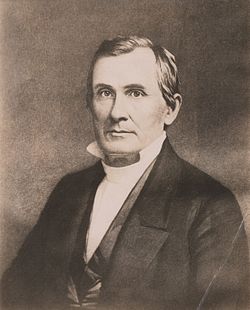
Junkin had an interesting life. A native of Pennsylvania, he was an Old School Presbyterian minister turned president of three colleges/universities (Lafayette College, Miami of Ohio, and Washington College -- now Washington and Lee University), he watched as his school turned against both him personally and the nation he believed that God had divinely crafted in the form of the United States. He and some of his family left Virginia shortly before the Civil War began, though not all of them. Several relatives (including most famously his son-in-law, Thomas Jackson, and his daughter, Margaret Junkin Preston -- who became known as the poetress of the Confederacy) rejected the Union he so loved, and threw their lot in with the Confederacy.
In the book I am currently working on, Junkin looms large, as much of it takes place in Lexington, Virginia at both Washington College and at the nearby Virginia Military Institute, where the Davidson family had strong ties. In Junkin we get a glimpse of so much of the Mainline of the mid-nineteenth century, one that was dominated by the evangelical Protestant denominations of the Second Great Awakening (the Methodists, the Baptists, and the Presbyterians). But we also get a glimpse at how fragmented that evangelicalism was. All three of those denominations, the largest churches in the United States, split over the issue of slavery in the years before the Civil War. In the case of the Presbyterians, they had already broken into two camps over other issues (though slavery played an increasing role), but had managed to largely stick together somewhat officially until nearly the very end.
When it came to slavery, Junkin and the Old School walked a very fine line. Junkin himself owned slaves (after he moved to Virginia to take the Washington College job), had attacked abolitionists (while living in Ohio), but also supported the American Colonization Society. Indeed, he probably got the job in Lexington, in part because the previous college president had become to vocal on his belief that slavery had led to economic stagnation in Virginia. His branch of the Presbyterian denomination found no Biblical reason to believe slavery to be a sin, though most Northern Old Schoolers did believe it (like virtually any human institution) could lead to sin. By the time of the Civil War, however the Southern component of the Old School was less and less likely to agree with their Northern counterparts, and indeed, would form their own denomination as war clouds began to gather.
What does this have to do with the Mainline of today? Well, several things actually. First, is that theological and doctrinal complexity (and sometimes gymnastics) are nothing new within the Mainline. While we might talk of the "evangelical denominations" (and I surely do), there were very real difference between and among the Methodists, Baptists, and Presbyterians of Junkin's time. They did not always agree with each other, internally or externally, and it would be surprising if the modern Mainline did as well. Likewise, those differences mattered, and in someways drove membership and engagement that makes modern "consensus" efforts look meager in comparison. They may not have always been right, but they also weren't always wrong on matters of faith either. Second, is that these denominations were fully engaged with both their nation and their national culture. They were active in trying to shape it (whether in condemning slavery as a sin, working to keep the nation together, or -- even-- in trying to form a new nation in the Confederacy), much more than they were being shaped by it. And they were calling their members to political action (in ways that would probably make modern Church/State separationists's heads spin). Recent scholarship (such as the this) that in essence blames the rise of evangelicals and their engagement in politics on the slavery issue as the chief cause of the Civil War -- or else the inability for politicians to craft a compromise short of war misses the point that denominations were already engaged on both sides of the issue (and that evangelicals in England had helped end slavery there without a war). Junkin's story also reminds us of one other thing, using political labels like "liberal" and "conservative" can be problematic. Some recent scholarship (see here for an example) has argued that liberal Protestantism of the mid-nineteenth century gave birth to the liberal Protestantism of the early twentieth (and hence, to that of the twenty-first century as well), in large part because they had to reject Biblical literalism in order to condemn slavery. But Northern Old School Presbyterians never doubted that slavery could lead to sin, even if it was mentioned in the Bible. What they wrestled with was how to deal with the institution. In short, there is much more complexity to their time, and to ours, than labels often have us believe. And Junkin proved, as much as he was a man of his time, to be able to be "liberal" on some things, and "conservative" on others. Indeed, it was his conservatism that made him into a Unionist--to the point that he shook the very soil of Virginia off his shoes and wiped it from his wagon wheels when he left the state.
As for Junkin and Gettysburg, after leaving Lexington in the spring of 1861, Junkin returned to Pennsylvania. After the battle was over in 1863, the aged reverend made his way to Gettysburg, where he began ministering to the wounded and amongst the captured Confederates as well. Among the prisoners, he discovered several former students, whom he astounded by pulling from one of his pockets a class list and talking about their course work and grades. Surely this was a surreal moment. Surely as well it was a reminder of what they (and the nation) had once been, and would one day be again.
Thursday, June 27, 2013
DOMA and the Tale of Two Mainlines
Whenever I hand a test back to a class, I invoke the "Lantzer 24 hour Rule" which states that no matter what grade they got, I will not talk to them about their tests until the next day. This allows them to re-read their answers not just in light of their grade but also my comments and to actually stop and think about what it is they've just gotten back. I think that is a good rule in life, not just because I often make snap judgements myself, but because a little reflection usually isn't a bad thing.
As its been over a day since the Supreme Court of the United States struck down the federal Defense of Marriage Act, I've had some time to reflect on what it means when it comes to the Mainline. In large part, I've been thinking about a question one of my students asked of me in my American Religious History class this past spring, right after SCOTUS heard arguments in the case: He asked if the High Court overturned DOMA, did that signal the demise of the Religious Right and the ascent of the Religious Left? As I've thought about it, my answer then was fairly accurate, so I thought I'd expand on it, and share it here.
To begin with, I said, there is much more (despite what some will tell you) to this debate than just religion and morality (as important as it is to some of those involved). Yes, Religious conservatives support DOMA and the traditional definition of marriage being between one man and one woman. And yes, many Religious liberals are arguing against it (more often than not talking about God's love for all humanity and how homosexual marriages can be a reflection of that divine love). But that being said, there are two other areas that are much more significant. The first is politics. Here, we aren't talking about national trends in culture or the make up of Congress, rather the political make up of the High Court. While there is a 5-4 split in Republican/Democratic appointees; on any given issue a coalition of justices can form that can alter that balance (longtime court watchers have long ago concluded that Justice Kennedy enjoys that title and the power that comes with it, see here for example). The other area is law. Not only DOMA itself (a bipartisan law, crafted when Bill Clinton was president), but also complications that have, can, and do arise when non-married partners either break up or have something catastrophic happen (a health care emergency for example) -- legal issues that aren't confined to just homosexual relationships, but have become increasingly prominent in cases over the past decade or so.
Thinking about that first part of my answer now, I should have gone on and done something "political sciencey" and just predicted that DOMA would be overturned. But I'm an historian, so I didn't. But that wasn't the end of my student's question, he had also asked about the ramifications of a DOMA ruling for religious Americans. Already, within that first 24 hours, articles have already appeared from the conservative end of the spectrum (see Christianity Today's excellent editorial here) about what comes next, as well as messages of joy and triumph from those more on the liberal end of the religious (and dare I say probably political) end of the spectrum (see here for what one UCC/Congregational Church did, and here for what the Episcopal Church has said).
But, was the ruling a "victory" for the Religious Left? While it might be spun as such, I would say it was more of a political victory than it was a religious triumph. My reason for saying so boils down to the fact that if we are looking for the origins of this issue as a reform, it did not originate within either the UCC or Episcopal denominations. Was it reflected in those (and other old Seven Sisters Mainline) denominations? Absolutely. But it was just that, a reflection of something that was going on within the wider culture. It is a case of denominations being influenced by culture, not one of denominational influence on that culture. For conservatives (political and religious alike) the ruling is more apt to be seen as further proof of secularization in American society and within (at least some) of America's churches. What does it mean for the new Mainline that I talk about in the last chapter of my book? Well, for that, we will have to wait and see!
That is my thinking some 24 hours on. At the time of the student question though, I raised another point. And that is about marriage itself. Conservatives (religious and political) were defending DOMA. But why? Why were religious people so invested in how the State defined marriage? Perhaps we should be asking why/how the State got that power to begin with. What, historically, had been the difference between "holy matrimony" and "civil marriage" and when/how had those two things been conflated. If, I asked, the Church had (whether by its own will or by the passage of time) allowed the State to take the lead on dealing with the legality of unions, did we have then or now a Church/State issue on our hands? In that same vein, what were to make of divorce (both within the Church, and in the laws of the State)? Was the Church (writ large, and taking into account it is made up individuals who are imperfect) doing a good job when it came to marriage teaching/counseling in general -- considering the oft cited statistic that half of all marriages (between heterosexuals) end in divorce? If DOMA was repealed I asked, and a given church/denomination refused to perform a wedding ceremony for religious reasons (even if the State approved) because the couple in question was homosexual, could that couple then sue for discrimination? Conservatives argued that repealing DOMA would be a slippery slope, that might lead to calls for legalizing polygamy (for example). Were they right? Can we be sure that they are wrong?
My student didn't have any answers to those questions. Neither did, nor do, I. And quite frankly, neither does anyone else. Despite the joyous bell ringing in some circles and the lamentations (or even conviction that the U.S. is now headed to Hell in a hand basket) in others that the DOMA decision prompted, we mere mortals don't know what the future holds. Nor should any of us, Right or Left, old or new Mainline, assume that this decision is the end all be all. As the aforementioned Christianity Today editorial points out, Supreme Court decisions rarely settle any cultural issue (the debate over abortion hasn't exactly ended). And as my fellow NYU author, Prof. Suzanna Danuta Walters, notes here, there are other issues out there that are bigger and even more important thatn marriage equality (she points out HIV/AIDS as one example). Indeed, I'd put the on going IRS audit story and growing NSA leak story as bigger domestic issues (both for the near and long term) than the DOMA decision this summer (the IRS audit of conservative groups has much larger implications both politically and in potential religious liberty issues than does the demise of DOMA I think). At least so far. In the meantime, there is nothing wrong with reflections and asking questions, and we will see where these and other issues take the Mainline -- both old and new.
As its been over a day since the Supreme Court of the United States struck down the federal Defense of Marriage Act, I've had some time to reflect on what it means when it comes to the Mainline. In large part, I've been thinking about a question one of my students asked of me in my American Religious History class this past spring, right after SCOTUS heard arguments in the case: He asked if the High Court overturned DOMA, did that signal the demise of the Religious Right and the ascent of the Religious Left? As I've thought about it, my answer then was fairly accurate, so I thought I'd expand on it, and share it here.
To begin with, I said, there is much more (despite what some will tell you) to this debate than just religion and morality (as important as it is to some of those involved). Yes, Religious conservatives support DOMA and the traditional definition of marriage being between one man and one woman. And yes, many Religious liberals are arguing against it (more often than not talking about God's love for all humanity and how homosexual marriages can be a reflection of that divine love). But that being said, there are two other areas that are much more significant. The first is politics. Here, we aren't talking about national trends in culture or the make up of Congress, rather the political make up of the High Court. While there is a 5-4 split in Republican/Democratic appointees; on any given issue a coalition of justices can form that can alter that balance (longtime court watchers have long ago concluded that Justice Kennedy enjoys that title and the power that comes with it, see here for example). The other area is law. Not only DOMA itself (a bipartisan law, crafted when Bill Clinton was president), but also complications that have, can, and do arise when non-married partners either break up or have something catastrophic happen (a health care emergency for example) -- legal issues that aren't confined to just homosexual relationships, but have become increasingly prominent in cases over the past decade or so.
Thinking about that first part of my answer now, I should have gone on and done something "political sciencey" and just predicted that DOMA would be overturned. But I'm an historian, so I didn't. But that wasn't the end of my student's question, he had also asked about the ramifications of a DOMA ruling for religious Americans. Already, within that first 24 hours, articles have already appeared from the conservative end of the spectrum (see Christianity Today's excellent editorial here) about what comes next, as well as messages of joy and triumph from those more on the liberal end of the religious (and dare I say probably political) end of the spectrum (see here for what one UCC/Congregational Church did, and here for what the Episcopal Church has said).
But, was the ruling a "victory" for the Religious Left? While it might be spun as such, I would say it was more of a political victory than it was a religious triumph. My reason for saying so boils down to the fact that if we are looking for the origins of this issue as a reform, it did not originate within either the UCC or Episcopal denominations. Was it reflected in those (and other old Seven Sisters Mainline) denominations? Absolutely. But it was just that, a reflection of something that was going on within the wider culture. It is a case of denominations being influenced by culture, not one of denominational influence on that culture. For conservatives (political and religious alike) the ruling is more apt to be seen as further proof of secularization in American society and within (at least some) of America's churches. What does it mean for the new Mainline that I talk about in the last chapter of my book? Well, for that, we will have to wait and see!
That is my thinking some 24 hours on. At the time of the student question though, I raised another point. And that is about marriage itself. Conservatives (religious and political) were defending DOMA. But why? Why were religious people so invested in how the State defined marriage? Perhaps we should be asking why/how the State got that power to begin with. What, historically, had been the difference between "holy matrimony" and "civil marriage" and when/how had those two things been conflated. If, I asked, the Church had (whether by its own will or by the passage of time) allowed the State to take the lead on dealing with the legality of unions, did we have then or now a Church/State issue on our hands? In that same vein, what were to make of divorce (both within the Church, and in the laws of the State)? Was the Church (writ large, and taking into account it is made up individuals who are imperfect) doing a good job when it came to marriage teaching/counseling in general -- considering the oft cited statistic that half of all marriages (between heterosexuals) end in divorce? If DOMA was repealed I asked, and a given church/denomination refused to perform a wedding ceremony for religious reasons (even if the State approved) because the couple in question was homosexual, could that couple then sue for discrimination? Conservatives argued that repealing DOMA would be a slippery slope, that might lead to calls for legalizing polygamy (for example). Were they right? Can we be sure that they are wrong?
My student didn't have any answers to those questions. Neither did, nor do, I. And quite frankly, neither does anyone else. Despite the joyous bell ringing in some circles and the lamentations (or even conviction that the U.S. is now headed to Hell in a hand basket) in others that the DOMA decision prompted, we mere mortals don't know what the future holds. Nor should any of us, Right or Left, old or new Mainline, assume that this decision is the end all be all. As the aforementioned Christianity Today editorial points out, Supreme Court decisions rarely settle any cultural issue (the debate over abortion hasn't exactly ended). And as my fellow NYU author, Prof. Suzanna Danuta Walters, notes here, there are other issues out there that are bigger and even more important thatn marriage equality (she points out HIV/AIDS as one example). Indeed, I'd put the on going IRS audit story and growing NSA leak story as bigger domestic issues (both for the near and long term) than the DOMA decision this summer (the IRS audit of conservative groups has much larger implications both politically and in potential religious liberty issues than does the demise of DOMA I think). At least so far. In the meantime, there is nothing wrong with reflections and asking questions, and we will see where these and other issues take the Mainline -- both old and new.
Wednesday, June 19, 2013
The Hart of the Matter
In the historian's world, perhaps the flagship journal is the American Historical Review. The organ of the American Historical Association , the largest professional organization for academic historian, the AHR covers just about every conceivable nook and cranny of History. As an author, it is gratifying to have your book reviewed by the AHR, because not every book is (or can be) afforded the space in the journal's precious pages. And so, I was honored, particularly because I did not have that honor for my first book, to see that The Mainline was reviewed in the June 2013 issue of the AHR (pages 881-882).
The review was written by D. G. Hart, one of the foremost historians of American evangelicalism working today. Professor Hart offers a nice summary of the book, and even says "To his credit, in a brief and episodic way, Lantzer is trying to remedy this [lack of focus on the Mainline of the Seven Sisters after the 1980s] historical oversight." I agree with him that there could have been more discussion of the Great Awakenings (something I have attempted to remedy in a previous post -- with perhaps more in the future). If I have a disagreement with his critique, however, it is that just because I talk about a new coalition constituting a new Mainline that in anyway detracts from the importance of the older Mainline. One of my goals was to save the very term "mainline" because I believe there is power in that name, and in order to save it, we have to be ready to address the fact that we cannot continue to talk about "mainline decline" forever -- because the old order of things having passed away (the Seven Sisters) has been replaced by a new group of evangelicals, Roman Catholics, and Pentecostals. And that this new Mainline is in need of study because it is both more reflective and (in many ways) more complex than the old Mainline of the Seven Sisters.
That being said, one issue that Prof. Hart did raise was a new one for me to think about and ponder, and that is the nature of denominationalism as a very American expression of Christianity and faith experience. As I reflected on it (and I hope to return to the subject in the future), though I have talked about it a bit on the blog, I was struck by the fact that I had never really stopped to think about who Christianity (and the Mainline itself) has been, and will most assuredly be, influenced by how American Christians organize themselves. Of course, my goal in the book was not to talk about denominations (and their inner workings) per se; but rather what those denominations have done. That being said, the denominations offer a wealth of information and insight in their own right that historians have hardly scratched the surface of -- not to mention opening the discussion further on what the trend towards non-denominationalism means for American Christianity. It also offers up the opportunity to really start pondering how the Christian faith is (and is not) different in the United States versus other places around the globe (something I wrote about last week when it comes to State Churches).
So, like all good reviews that offer a critique, this one got me thinking. Not only about what I have written but also about things that need more study and attention. As a professional historian then, the review in the AHR has become not just an honor, but a call for more work.
The review was written by D. G. Hart, one of the foremost historians of American evangelicalism working today. Professor Hart offers a nice summary of the book, and even says "To his credit, in a brief and episodic way, Lantzer is trying to remedy this [lack of focus on the Mainline of the Seven Sisters after the 1980s] historical oversight." I agree with him that there could have been more discussion of the Great Awakenings (something I have attempted to remedy in a previous post -- with perhaps more in the future). If I have a disagreement with his critique, however, it is that just because I talk about a new coalition constituting a new Mainline that in anyway detracts from the importance of the older Mainline. One of my goals was to save the very term "mainline" because I believe there is power in that name, and in order to save it, we have to be ready to address the fact that we cannot continue to talk about "mainline decline" forever -- because the old order of things having passed away (the Seven Sisters) has been replaced by a new group of evangelicals, Roman Catholics, and Pentecostals. And that this new Mainline is in need of study because it is both more reflective and (in many ways) more complex than the old Mainline of the Seven Sisters.
That being said, one issue that Prof. Hart did raise was a new one for me to think about and ponder, and that is the nature of denominationalism as a very American expression of Christianity and faith experience. As I reflected on it (and I hope to return to the subject in the future), though I have talked about it a bit on the blog, I was struck by the fact that I had never really stopped to think about who Christianity (and the Mainline itself) has been, and will most assuredly be, influenced by how American Christians organize themselves. Of course, my goal in the book was not to talk about denominations (and their inner workings) per se; but rather what those denominations have done. That being said, the denominations offer a wealth of information and insight in their own right that historians have hardly scratched the surface of -- not to mention opening the discussion further on what the trend towards non-denominationalism means for American Christianity. It also offers up the opportunity to really start pondering how the Christian faith is (and is not) different in the United States versus other places around the globe (something I wrote about last week when it comes to State Churches).
So, like all good reviews that offer a critique, this one got me thinking. Not only about what I have written but also about things that need more study and attention. As a professional historian then, the review in the AHR has become not just an honor, but a call for more work.
Tuesday, May 21, 2013
On Religious Liberty
I was first introduced to the great British philosopher John Stuart Mill in an undergrad political science class. We had to read his On Liberty, and his notions about rights -- whether I always agreed with him or not -- have stuck with me ever since as one of the best examples of classical liberal thought on the subject.
What does that have to do with The Mainline? Well, Mill also wrote on the topic of religion (probably the best example being his essay "Theism") in which he explored the arguments for and against belief in God/the divine. Mill's eventual claim, despite admitting early on that he was not religious and never really had been, is interesting chiefly because unlike some of his contemporaries in late Victorian Britain, Mill was unwilling to reject the idea of God. For him, while he could not advocate belief, neither could he put forward a notion of unbelief either. Rather, for some he argued, there was enough evidence to hope that religion, that God, might be. And that was enough for Mill.
I got to thinking about Mill, liberty, and belief/unbelief a bit more in the past few days. There have been some wonderful essays done by R.R. Reno (editor of First Things) about religious liberty in America today (Reno argues in part that its definition is being altered by secular humanists to mean freedom from religion in the public square/religion is fine so long as it is private and kept that way) as well as by John C. Pinheiro (of Aquinas College) about the need to study Religious History (noting that the world's atheist population is estimated to be only 3 percent, meaning that 97 percent of humanity has some form of religious belief system, and so academia needs to take the study of religion seriously). In short, both these pieces reinforce arguments that I (hope I) made in The Mainline, about the importance of religious belief (both privately and in the public square) in American History, and why secular humanists were not only going against the tide of our history but also missing out on the ways in which religion and faith have (and will continue to) shape us. The question really is not will religion/faith be a factor but which religion/faith will be influencing us in the twenty-first century (and I agree with these authors that secular humanism, even if at times given greater influence than it actually has, is a faith).
And those ruminations have also got me thinking about what it means for Christians (as that is the faith I write about in The Mainline) to accept a concept of religious liberty. Not just in the spirit of toleration, but also internally. How should those outside a particular denomination feel about the efforts of some denominational leaders to transform historic doctrines within their faith tradition (I talk about an earlier dust up in The Mainline, but for the latest from the Episcopal Church's Presiding Bishop, take a look at this)? How should people within that denomination feel/react? What does it mean for the future? Should we treat them with Christian charity, extend to them religious liberty if you will, or do they present a threat to the faith that should be cast out? For 97% of the world's population such issues matter. For academics, beyond just being interesting things to study it matter as well, because such a discussion would help us not only make the case that religious history should be studied, but also force us to think in new ways about old concepts and investigate what it means to believe or not (whether in God or in a point of doctrine).
I'm not sure what Mill would say about all this. But there is always hope. Hope that we can disagree, without being disagreeable. And hope that we can be honest enough to say that faith matters.
What does that have to do with The Mainline? Well, Mill also wrote on the topic of religion (probably the best example being his essay "Theism") in which he explored the arguments for and against belief in God/the divine. Mill's eventual claim, despite admitting early on that he was not religious and never really had been, is interesting chiefly because unlike some of his contemporaries in late Victorian Britain, Mill was unwilling to reject the idea of God. For him, while he could not advocate belief, neither could he put forward a notion of unbelief either. Rather, for some he argued, there was enough evidence to hope that religion, that God, might be. And that was enough for Mill.
I got to thinking about Mill, liberty, and belief/unbelief a bit more in the past few days. There have been some wonderful essays done by R.R. Reno (editor of First Things) about religious liberty in America today (Reno argues in part that its definition is being altered by secular humanists to mean freedom from religion in the public square/religion is fine so long as it is private and kept that way) as well as by John C. Pinheiro (of Aquinas College) about the need to study Religious History (noting that the world's atheist population is estimated to be only 3 percent, meaning that 97 percent of humanity has some form of religious belief system, and so academia needs to take the study of religion seriously). In short, both these pieces reinforce arguments that I (hope I) made in The Mainline, about the importance of religious belief (both privately and in the public square) in American History, and why secular humanists were not only going against the tide of our history but also missing out on the ways in which religion and faith have (and will continue to) shape us. The question really is not will religion/faith be a factor but which religion/faith will be influencing us in the twenty-first century (and I agree with these authors that secular humanism, even if at times given greater influence than it actually has, is a faith).
And those ruminations have also got me thinking about what it means for Christians (as that is the faith I write about in The Mainline) to accept a concept of religious liberty. Not just in the spirit of toleration, but also internally. How should those outside a particular denomination feel about the efforts of some denominational leaders to transform historic doctrines within their faith tradition (I talk about an earlier dust up in The Mainline, but for the latest from the Episcopal Church's Presiding Bishop, take a look at this)? How should people within that denomination feel/react? What does it mean for the future? Should we treat them with Christian charity, extend to them religious liberty if you will, or do they present a threat to the faith that should be cast out? For 97% of the world's population such issues matter. For academics, beyond just being interesting things to study it matter as well, because such a discussion would help us not only make the case that religious history should be studied, but also force us to think in new ways about old concepts and investigate what it means to believe or not (whether in God or in a point of doctrine).
I'm not sure what Mill would say about all this. But there is always hope. Hope that we can disagree, without being disagreeable. And hope that we can be honest enough to say that faith matters.
Wednesday, May 15, 2013
Course Work
As those of you who have read the book or this blog probably know, The Mainline was shaped by my time in the classroom. For the first time since the book came out, I was able to teach with it in an American Religious History course. While of course I'm biased, and hold out hope that nice things will be said on the student evaluations, I thought that it went quite well. But rather than dwell on student reaction to having to read a book by their professor, I'd much rather talk about the work my students did in the course.
There were 11 students enrolled in the course (which was sponsored by the Honor's program at Butler University). And I must say, they did some really exceptional work and provided their professor with, if not always new insights, then at least a reminder of why I thought writing the book in the first place was a good idea. In short, the vibrancy of the field of American Religious History remains quite bright, and I'm as convinced as much as I ever way that there is still much more to study and learn from this field.
My students had three mini-research projects to complete in the areas of colonial religious history (they were assigned one of England's New World colonies and had to investigate the role religion played in its founding), the use of multimedia outlets to convey religious messages (looking at websites, television programs, movies, or listening to the radio), and modern worship (attending a worship service -- either new to them or regular). Their findings were insightful: In the colonial project, several of them noted how the Puritans created a "moral establishment of religion" in their colonies. One student also pointed out, in what I found to be quite telling considering recent discussion of religious liberty, the degree to which political control of a colony's government seemed to dictate the degree of religious freedom colonists enjoyed. For the multimedia project one thing that I took away (and seems to have changed somewhat since the last time I taught the course) was the degree to which these various media outlets are melded and blended together by both ministries and listeners/viewers. And when it came to modern worship, what was evident in virtually all of the presentations was the vibrancy and variety of religious expression that is alive and well in America today.
We, as a class, were also fortunate enough to have four guest speakers over the course of the semester. Two of the leaders of Butler's chapter of Cru (formerly known as Campus Crusade for Christ) came and spoke about the challenges and blessings of their campus ministry. The directer of the Hillel Center on campus also came in and spoke about the Jewish American experience (both historically and on campus). The president of the Muslim Student Association also spoke (and was kind enough to do so at the request of her former professor), giving students yet another (and in this case at the peer level) angle on American religious experience writ large -- and at the campus level. Our fourth guest speaker, via Skype, was an old friend, Prof. Jason VanHorn of Calvin College. Who talked about using GIS to study the Geography of Religion, including helping congregations in Grand Rapids, Michigan better understand their neighborhoods and what outreach services they might be best suited to bringing to their local communities. All of these presentations were well received and sparked good discussion both during and after class.
But for me, perhaps the highlight of the semester was the final papers and the presentations (even if we had to rush through some of them). My students had to research over the course of the semester a topic that interested them about American Religious History. Four papers dealt with politics and religion (particularly the Founders and disestablishment), four dealt with various facets of the Catholic experience in the United states (three on immigrant Catholicism and one on Catholic schools), and three covered various angles within the topic of Religion and American Culture (two of which built upon their previous course work).
It was a great semester and bodes well, I think, not only for the use of The Mainline in the classroom, but further study of American Religious History.
There were 11 students enrolled in the course (which was sponsored by the Honor's program at Butler University). And I must say, they did some really exceptional work and provided their professor with, if not always new insights, then at least a reminder of why I thought writing the book in the first place was a good idea. In short, the vibrancy of the field of American Religious History remains quite bright, and I'm as convinced as much as I ever way that there is still much more to study and learn from this field.
My students had three mini-research projects to complete in the areas of colonial religious history (they were assigned one of England's New World colonies and had to investigate the role religion played in its founding), the use of multimedia outlets to convey religious messages (looking at websites, television programs, movies, or listening to the radio), and modern worship (attending a worship service -- either new to them or regular). Their findings were insightful: In the colonial project, several of them noted how the Puritans created a "moral establishment of religion" in their colonies. One student also pointed out, in what I found to be quite telling considering recent discussion of religious liberty, the degree to which political control of a colony's government seemed to dictate the degree of religious freedom colonists enjoyed. For the multimedia project one thing that I took away (and seems to have changed somewhat since the last time I taught the course) was the degree to which these various media outlets are melded and blended together by both ministries and listeners/viewers. And when it came to modern worship, what was evident in virtually all of the presentations was the vibrancy and variety of religious expression that is alive and well in America today.
We, as a class, were also fortunate enough to have four guest speakers over the course of the semester. Two of the leaders of Butler's chapter of Cru (formerly known as Campus Crusade for Christ) came and spoke about the challenges and blessings of their campus ministry. The directer of the Hillel Center on campus also came in and spoke about the Jewish American experience (both historically and on campus). The president of the Muslim Student Association also spoke (and was kind enough to do so at the request of her former professor), giving students yet another (and in this case at the peer level) angle on American religious experience writ large -- and at the campus level. Our fourth guest speaker, via Skype, was an old friend, Prof. Jason VanHorn of Calvin College. Who talked about using GIS to study the Geography of Religion, including helping congregations in Grand Rapids, Michigan better understand their neighborhoods and what outreach services they might be best suited to bringing to their local communities. All of these presentations were well received and sparked good discussion both during and after class.
But for me, perhaps the highlight of the semester was the final papers and the presentations (even if we had to rush through some of them). My students had to research over the course of the semester a topic that interested them about American Religious History. Four papers dealt with politics and religion (particularly the Founders and disestablishment), four dealt with various facets of the Catholic experience in the United states (three on immigrant Catholicism and one on Catholic schools), and three covered various angles within the topic of Religion and American Culture (two of which built upon their previous course work).
It was a great semester and bodes well, I think, not only for the use of The Mainline in the classroom, but further study of American Religious History.
Wednesday, March 13, 2013
Welcome News from Rome and Dr. Roof

Today, I happened to be home (spring break) and so was able to watch my fourth papal conclave, and fifth pope live on television. Granted, I have no meaningful recollection of the first two (Popes Paul VI and John Paul I) and have only vague memories of watching the election of Pope John Paul II (on my family's black and white t.v.); but these last two (Popes Benedict XVI and Francis I) I watched from "white smoke" to first official prayer. Such an event opens the doors for "pontificating" (if you'll excuse the expression) on the part of the news media (once the white smoke happens in Rome, there is time to fill on the air), and thanks to social media by others as well. As an American Religious Historian, it is with such comments that I will focus on at least in passing.
Two things stood out to me this afternoon. First, was that along with the expected speculation and discussion of what was happening while we awaited the emergence of Francis I (indeed, discovering that was who we were waiting for), there was also a good deal of "this is what the next pope has/needs to do" coming from the news media. Some of it was of the bland variety ("he will need to use social media"), but some of it was also very American-centric ("Catholics want the Vatican to allow priests to be married" one commentator asserted, apparently know what ALL Catholics -- American or otherwise-- want on the issue). And some of it, of course, was also politically liberal ("the next pope will need open the Church up to gays and lesbians"). I found it both fun and odd at the same time that the news media was setting up a laundry list of things the new pope HAD to do, as if the new pontiff had no idea about these (and other) issues, and might actually prioritize other things. Furthermore, it never seemed to cross the journalists' minds (and the priests and bishops who I saw that were part of the interviews were apparently to polite to point out) that perhaps the Church and the new pope might disagree with their assumptions altogether.
The second thing that I noticed, which has been on the rise over the past few days, was undertones of anti-Catholicism in discussions about the looming papal vote. Some of this has come from the news media (some lamenting that because of his devotion to John Paul II, Francis I was likely not going to revive Liberation Theology, nor do past comments he has made on abortion line up with what a pro-choice politics). But some of it has come from American Protestants. In that regard, much of it has not been directed at the papacy per se (at least not yet), but rather internally, as (for example) some evangelical Protestants have attacked others on Twitter for daring to say that Christians (regardless of denomination) should pray for the cardinals as they met in the conclave to vote. Neither of these is new, and the former variety is likely to intensify in the years to come. As an academic Historian, I will be keeping my eye as much on these things as well as the pronouncements Francis I makes in the days and years to come.
And so, that was the news from Rome today. But while watching, listening, and waiting, I also was doing some reading (I can take the talking heads and speculation for only so long). While flipping through the March 2013 issue of the Journal of American History, I eventually found my way to pages 1207 and 1208. For there was a review of The Mainline by Wade Clark Roof! To say that I was pleased to have such a prominent scholar review my book is an understatement. To find that he actually enjoyed it ("excellent denomination-by-denomination analysis," the "politics of decline" decline is noted as "insightful analysis") even better! While offering some critique as well, to say that Dr. Roof's review made my day is also an understatement.
All in all then, a very full day. A very blessed day.
Thursday, February 14, 2013
The Souls of Real People
Historians have an awesome responsibility. As a profession, we deal with the past of course. But it is a real past, the real past, which was constructed, inhabited by real people (just like us). In telling their story then, historians have the task of both constructing an argument about the past, as well as doing justice to the past and the people we are writing about.
Today, I had a chance to really ponder those sentiments. Before heading downtown to teach, I stopped off at Crown Hill Cemetery in Indianapolis. The final resting place of Hoosiers since the mid-1860s, those interned there include the politicians (governors, senators, vice presidents, and a president), the infamous (John Dillinger), powerful businessmen and community leaders, as well as average citizens. My purpose in driving through the cemetery grounds was to find a few graves of people I have studied and written about over the past few years. It was both intellectual curiosity as well as hoping to find a few new details for my current project.
What does this have to do with The Mainline? Well, quite a bit actually, at least insofar as we are thinking of the Mainline in the nineteenth and early twentieth centuries (see Chapter 2). I am currently researching the life and times of Preston Davidson, a native Hoosier from a distinguished family in Indianapolis (his maternal grandfather was governor of the state), who fought for the South during the Civil War. Indeed, his life is full of virtually every Civil War cliche one can think of, and in many ways he remained unreconstructed to the end of his life. What makes his story compelling in terms of The Mainline, however, was more to do with his religious life. His paternal grandfather was a Presbyterian minister in Virginia. The Reverend Andrew Davidson was a church planter along Virginia's Shenandoah Valley, centered in and around Lexington. The Reverend Davidson was an Old School Presbyterian, a devout Calvinist, and could by all accounts deliver a powerful sermon. As such, he represents both a doctrinal divide within American Protestantism, the tensions involved in early nineteenth century America over slavery, and desire for evangelicals to find both acceptance and to help shape American culture (the Davidson family was a product and protector of Lexington's chief school of higher education, now known as Washington and Lee University, for virtually all of the nineteenth century).

Two of the Reverend's sons were part of the "Virginia exodus" that helped settle Indiana. One, the Reverend Charles Baker Davidson, followed in his father's ministerial footsteps -- though exhibiting a denominational fluidity that seems much more modern than perhaps is often admitted. Baker joined the Methodist Church in Indiana, serving congregations in and around the Evansville area, and by the time of the Civil War, left that branch of Protestantism for the Episcopal Church. Preston's father, Alexander Davidson, became intrinsically linked to his father-in-law's political career and ambitions. But when it came to religion, Alexander exhibited more of the evangelical streak of his family: Helping to found Indianapolis's Second Presbyterian Church, whose first pastor (who married Alexander and Catherine Noble) was Henry Ward Beecher. Beecher introduced his sister, Harriet, to a former Noble family slave whom the governor had brought to Indiana after the deaths of his own parents. The former slave's name was Tom, and the Beechers often visited with him in his cabin on the Noble family farm.

To add a further layer, while Preston eventually enrolled in the then Washington College in Lexington (from which he went on to fight for the Confederacy alongside his cousins, other family members, and under the command of Lexington's famed Presbyterian warrior, Stonewall Jackson), his first taste of higher education was in Indianapolis at North Western Christian University -- which is today known as Butler University. The driving force behind the school was Ovid Butler, who was a staunch free soiler and devout evangelical. This was the world that produced Preston Davidson, and as numerous scholars have argued, we cannot really grasp why the Civil War was fought, or why it lasted so long, unless we appreciate the role religion played in American life during the first half of the nineteenth century.
But the Noble-Davidson plot was not the only one I visited. I also tracked down the grave of the man who was the subject of my first book, the Reverend Edward S. Shumaker. Not unlike Davidson, Shumaker was the product of the evangelical Midwest; though of the second half of the nineteenth century. And while anti-slavery had been the main reform of Shumaker's father's generation, for Edward, who became a Methodist minister, the chief reform was Prohibition. He became a champion for the dry crusade and eventually the leader of the Indiana branch of the Anti-Saloon League. Shumaker became more a political operative than minister, fought battles against wets, damps, and even amongst his fellow drys. Despite the ups and downs, thankfully for Shumaker, his death came before repeal of his beloved 18th Amendment.
 Shumaker's story reminds us yet again of the power of evangelical Protestantism to shape American culture. To forget that, is to forget not just one of the chief reasons why Prohibition became a reality, but also why Protestants were so invested in such a reform -- combating societal evils was sometimes easier than dealing with doctrinal and theological issues.
To forget these types of stories, to neglect religious aspect of reforms, of life, and their impact on American culture, is to miss a huge part of our history. It also does something else: It downplays the potential that religion has to continue to shape that culture today. Ponder that, and for those whose graves I visited today:
Today, I had a chance to really ponder those sentiments. Before heading downtown to teach, I stopped off at Crown Hill Cemetery in Indianapolis. The final resting place of Hoosiers since the mid-1860s, those interned there include the politicians (governors, senators, vice presidents, and a president), the infamous (John Dillinger), powerful businessmen and community leaders, as well as average citizens. My purpose in driving through the cemetery grounds was to find a few graves of people I have studied and written about over the past few years. It was both intellectual curiosity as well as hoping to find a few new details for my current project.
What does this have to do with The Mainline? Well, quite a bit actually, at least insofar as we are thinking of the Mainline in the nineteenth and early twentieth centuries (see Chapter 2). I am currently researching the life and times of Preston Davidson, a native Hoosier from a distinguished family in Indianapolis (his maternal grandfather was governor of the state), who fought for the South during the Civil War. Indeed, his life is full of virtually every Civil War cliche one can think of, and in many ways he remained unreconstructed to the end of his life. What makes his story compelling in terms of The Mainline, however, was more to do with his religious life. His paternal grandfather was a Presbyterian minister in Virginia. The Reverend Andrew Davidson was a church planter along Virginia's Shenandoah Valley, centered in and around Lexington. The Reverend Davidson was an Old School Presbyterian, a devout Calvinist, and could by all accounts deliver a powerful sermon. As such, he represents both a doctrinal divide within American Protestantism, the tensions involved in early nineteenth century America over slavery, and desire for evangelicals to find both acceptance and to help shape American culture (the Davidson family was a product and protector of Lexington's chief school of higher education, now known as Washington and Lee University, for virtually all of the nineteenth century).

Two of the Reverend's sons were part of the "Virginia exodus" that helped settle Indiana. One, the Reverend Charles Baker Davidson, followed in his father's ministerial footsteps -- though exhibiting a denominational fluidity that seems much more modern than perhaps is often admitted. Baker joined the Methodist Church in Indiana, serving congregations in and around the Evansville area, and by the time of the Civil War, left that branch of Protestantism for the Episcopal Church. Preston's father, Alexander Davidson, became intrinsically linked to his father-in-law's political career and ambitions. But when it came to religion, Alexander exhibited more of the evangelical streak of his family: Helping to found Indianapolis's Second Presbyterian Church, whose first pastor (who married Alexander and Catherine Noble) was Henry Ward Beecher. Beecher introduced his sister, Harriet, to a former Noble family slave whom the governor had brought to Indiana after the deaths of his own parents. The former slave's name was Tom, and the Beechers often visited with him in his cabin on the Noble family farm.

To add a further layer, while Preston eventually enrolled in the then Washington College in Lexington (from which he went on to fight for the Confederacy alongside his cousins, other family members, and under the command of Lexington's famed Presbyterian warrior, Stonewall Jackson), his first taste of higher education was in Indianapolis at North Western Christian University -- which is today known as Butler University. The driving force behind the school was Ovid Butler, who was a staunch free soiler and devout evangelical. This was the world that produced Preston Davidson, and as numerous scholars have argued, we cannot really grasp why the Civil War was fought, or why it lasted so long, unless we appreciate the role religion played in American life during the first half of the nineteenth century.
But the Noble-Davidson plot was not the only one I visited. I also tracked down the grave of the man who was the subject of my first book, the Reverend Edward S. Shumaker. Not unlike Davidson, Shumaker was the product of the evangelical Midwest; though of the second half of the nineteenth century. And while anti-slavery had been the main reform of Shumaker's father's generation, for Edward, who became a Methodist minister, the chief reform was Prohibition. He became a champion for the dry crusade and eventually the leader of the Indiana branch of the Anti-Saloon League. Shumaker became more a political operative than minister, fought battles against wets, damps, and even amongst his fellow drys. Despite the ups and downs, thankfully for Shumaker, his death came before repeal of his beloved 18th Amendment.

To forget these types of stories, to neglect religious aspect of reforms, of life, and their impact on American culture, is to miss a huge part of our history. It also does something else: It downplays the potential that religion has to continue to shape that culture today. Ponder that, and for those whose graves I visited today:
Requiescat in pace
Saturday, January 5, 2013
Christmas at Disney World
This year for Christmas, my wife and I gave our kids the gift of a nearly week long trip to Walt Disney World in Florida. Considering the turn the weather took the day after Christmas at home in Indiana, and how nice it turned out to be in Florida, it also ended up being a gift to us as well!
Now, for those of you who have read this blog before, you know this isn't a travel blog. This is supposed to be about my book about Mainline Christianity -- stick with me, and I'll get there, I promise. For those of you who are stumbling upon this blog because you are looking for a review of the new Fantasy Land, let me just say now it is awesome, and you should start your day with Belle!
Now, how did I come to post about Disney World on this book blog? I surely didn't intend to do so, but one of the nice things about a vacation that includes waiting in line (unless you can Fast Pass -- which you should) is that you get some time to think. And for me, this post started when we visited EPCOT and my son, while we were in Norway said "let's go into that church." For those of you who are rusty on your EPCOT Norwegian lay of the land, the pavilion includes a stave church building (which houses an exhibit on the Vikings). My son's request got me thinking about where God was at Disney World (which very could, as I thought some more about it, be a whole article in and of itself). But this is not that article, rather, this is about Disney World at Christmas time, and what American Mainline Christianity (whether of the old or new variety) might learn from the House of Mouse.
Before anyone assumes this is going to be some new angle on the whole "church as business model" let me lay those hopes/fears aside for you. It is not (remember, this is not that article). While I think there are some valid arguments/examples one could make (as well as a warnings, including that "one size does not fit all") along those lines, this post is about Disney at Christmastime. You see, one of the main reasons my wife and I had decided to do this trip (besides that we have a wonderful time here in Florida, along with the aforementioned weather issue) was that we wanted to see what Disney did for Christmas. Not for any academic reasons (this post aside) but just to see it. We knew we weren't going to make the journey AT Christmas, but after a quick check, discovered that the parks stayed decorated into the New Year. And that sealed the deal!
What Disney does to their parks at Christmas is pretty special. The lights are awesome. The displays are cute. The merchandise is everywhere. One could visit Disney World at Christmas and see nothing but commercialization and consumerism and even secularization run amok. Indeed, a trip here at Christmastime might fire some members of American Mainline Christianity into bemoaning what the Magic Kingdom has done or at least is a symptom of to culture, including Christian culture, for all those reasons. Before you know it, we'd see calls for boycotts, petitions asking Disney to support "traditional values," and maybe even op-eds about Disney's image as "family friendly" while making money off of movie divisions that "glorify violence" or some such. If that seems far fetched, it shouldn't -- all those things have happened in the last 10 to 15 years (usually from some corner of the Religious Right, or from evangelical circles, and all with precious little to show for it).
But before that happens here, let me ask you, dear reader, to step back -- either from launching such a drive or from shaking your head at those who would -- and join me for a second at Disney's Hollywood Studios. Click on that highlighted hyperlink and behold the Osborne Family Spectacle of Dancing Lights. You'll be beholding for awhile, as there are some 5 million lights involved. And let me tell you what I saw, and heard, just the other night, when I beheld them for the first time: the very spirit of Christmas.
We were directed by the park staff (those "cast members" in Disney speak) down and around the byways of park's streets to begin in front of a Nativity light display. We'd seen it earlier in the day of course, and I'd thought it odd that it seemed tucked away near the back of the (then unlit) display area. But now I understood why. You start there, away from the bulk of the display, so that those lights stand out more. They draw you in. Soon enough, you are pulled away (if only by the strength of the crowd) to other displays. Some are religious in nature (the wise men, angels, peace on earth) some are not. But even when you aren't focused visually on the Nativity, you are never far from it, thanks to the music that is playing -- sounds of the season, some secular, some holy, but all Christmas.
And that trip through the lights got me thinking. I have heard Christmas music virtually everyday since late November. At Disney World it was playing still. "Light" seemed to be the buzzword this year at the Advent and Christmas services I either attended or watched. Here were 5 million lights in just one section of one Disney park. The people I had attended services with -- friends, family, neighbors -- had all likely heard those messages before. Here at Disney World, I was hearing (and singing) some of the same hymns, "seeing" the same message, with thousands of people I didn't know, literally from every corner of the globe (and not just at EPCOT -- we saw groups from various Central and South American nations, and encountered visitors from across Europe, as well as from Asia and Australia, amongst other places). Can any American denomination, inside or outside, the Mainline say their message (while no doubt more deeply seeded with theology and doctrine) was heard by so many? Did any have such an "evangelizing moment" to reach out to those outside of the Christian faith and tradition (those whom many American evangelicals would have once called "the lost," or "unreached") with the Good News of Christ's birth?
Now, I'm not saying that Disney World was attempting to spread the Christmas message of the Church in an evangelizing way. If it gets cold and snowy enough in Indiana later this winter, you might even get me to say (as my favorite of Snow White's dwarfs, Grumpy, might do) that even if they were, it wouldn't make up for all the commercialization and secular message that comes with it. But that doesn't mean that there isn't a lesson to be had in all of this about the Mainline of American Christianity either. If a secular corporation can do this, (or this) what more can (and should) the Church be doing? As one of my favorite sermons from this past Advent season pointed out, Christmas started with Christianity and the Church -- and Christians should not be afraid to say so! Perhaps scholars need to look a bit more deeply into issues of culture (something that gets a few pages in the Mainline book, but no doubt needs more attention). Maybe there is more for the church planners (as well as those who study such movements) to learn about/from the whole "corporation model" of Church growth. With less than a year until the start of the next Advent and Christmas season, there is still time to think about such things before they are upon us again. And there is also time to reflect that sometimes such epiphanies can come to us at the most unexpected times and places -- not unlike that very first Christmas itself.
Now, for those of you who have read this blog before, you know this isn't a travel blog. This is supposed to be about my book about Mainline Christianity -- stick with me, and I'll get there, I promise. For those of you who are stumbling upon this blog because you are looking for a review of the new Fantasy Land, let me just say now it is awesome, and you should start your day with Belle!
Now, how did I come to post about Disney World on this book blog? I surely didn't intend to do so, but one of the nice things about a vacation that includes waiting in line (unless you can Fast Pass -- which you should) is that you get some time to think. And for me, this post started when we visited EPCOT and my son, while we were in Norway said "let's go into that church." For those of you who are rusty on your EPCOT Norwegian lay of the land, the pavilion includes a stave church building (which houses an exhibit on the Vikings). My son's request got me thinking about where God was at Disney World (which very could, as I thought some more about it, be a whole article in and of itself). But this is not that article, rather, this is about Disney World at Christmas time, and what American Mainline Christianity (whether of the old or new variety) might learn from the House of Mouse.
Before anyone assumes this is going to be some new angle on the whole "church as business model" let me lay those hopes/fears aside for you. It is not (remember, this is not that article). While I think there are some valid arguments/examples one could make (as well as a warnings, including that "one size does not fit all") along those lines, this post is about Disney at Christmastime. You see, one of the main reasons my wife and I had decided to do this trip (besides that we have a wonderful time here in Florida, along with the aforementioned weather issue) was that we wanted to see what Disney did for Christmas. Not for any academic reasons (this post aside) but just to see it. We knew we weren't going to make the journey AT Christmas, but after a quick check, discovered that the parks stayed decorated into the New Year. And that sealed the deal!
What Disney does to their parks at Christmas is pretty special. The lights are awesome. The displays are cute. The merchandise is everywhere. One could visit Disney World at Christmas and see nothing but commercialization and consumerism and even secularization run amok. Indeed, a trip here at Christmastime might fire some members of American Mainline Christianity into bemoaning what the Magic Kingdom has done or at least is a symptom of to culture, including Christian culture, for all those reasons. Before you know it, we'd see calls for boycotts, petitions asking Disney to support "traditional values," and maybe even op-eds about Disney's image as "family friendly" while making money off of movie divisions that "glorify violence" or some such. If that seems far fetched, it shouldn't -- all those things have happened in the last 10 to 15 years (usually from some corner of the Religious Right, or from evangelical circles, and all with precious little to show for it).
But before that happens here, let me ask you, dear reader, to step back -- either from launching such a drive or from shaking your head at those who would -- and join me for a second at Disney's Hollywood Studios. Click on that highlighted hyperlink and behold the Osborne Family Spectacle of Dancing Lights. You'll be beholding for awhile, as there are some 5 million lights involved. And let me tell you what I saw, and heard, just the other night, when I beheld them for the first time: the very spirit of Christmas.
We were directed by the park staff (those "cast members" in Disney speak) down and around the byways of park's streets to begin in front of a Nativity light display. We'd seen it earlier in the day of course, and I'd thought it odd that it seemed tucked away near the back of the (then unlit) display area. But now I understood why. You start there, away from the bulk of the display, so that those lights stand out more. They draw you in. Soon enough, you are pulled away (if only by the strength of the crowd) to other displays. Some are religious in nature (the wise men, angels, peace on earth) some are not. But even when you aren't focused visually on the Nativity, you are never far from it, thanks to the music that is playing -- sounds of the season, some secular, some holy, but all Christmas.
And that trip through the lights got me thinking. I have heard Christmas music virtually everyday since late November. At Disney World it was playing still. "Light" seemed to be the buzzword this year at the Advent and Christmas services I either attended or watched. Here were 5 million lights in just one section of one Disney park. The people I had attended services with -- friends, family, neighbors -- had all likely heard those messages before. Here at Disney World, I was hearing (and singing) some of the same hymns, "seeing" the same message, with thousands of people I didn't know, literally from every corner of the globe (and not just at EPCOT -- we saw groups from various Central and South American nations, and encountered visitors from across Europe, as well as from Asia and Australia, amongst other places). Can any American denomination, inside or outside, the Mainline say their message (while no doubt more deeply seeded with theology and doctrine) was heard by so many? Did any have such an "evangelizing moment" to reach out to those outside of the Christian faith and tradition (those whom many American evangelicals would have once called "the lost," or "unreached") with the Good News of Christ's birth?
Now, I'm not saying that Disney World was attempting to spread the Christmas message of the Church in an evangelizing way. If it gets cold and snowy enough in Indiana later this winter, you might even get me to say (as my favorite of Snow White's dwarfs, Grumpy, might do) that even if they were, it wouldn't make up for all the commercialization and secular message that comes with it. But that doesn't mean that there isn't a lesson to be had in all of this about the Mainline of American Christianity either. If a secular corporation can do this, (or this) what more can (and should) the Church be doing? As one of my favorite sermons from this past Advent season pointed out, Christmas started with Christianity and the Church -- and Christians should not be afraid to say so! Perhaps scholars need to look a bit more deeply into issues of culture (something that gets a few pages in the Mainline book, but no doubt needs more attention). Maybe there is more for the church planners (as well as those who study such movements) to learn about/from the whole "corporation model" of Church growth. With less than a year until the start of the next Advent and Christmas season, there is still time to think about such things before they are upon us again. And there is also time to reflect that sometimes such epiphanies can come to us at the most unexpected times and places -- not unlike that very first Christmas itself.
Subscribe to:
Posts (Atom)