Showing posts with label Gettysburg. Show all posts

Tuesday, November 19, 2013

"It is for us the living"

I have been lucky enough to travel to Gettysburg twice.  The first time was with my family, when I was about nine years old.  The second time was in Eighth Grade, as part of a school trip to Washington, D.C. (still among my favorite trips ever, thanks Mr. Smith!).  As an historian, I've talked about the Civil War that made Gettysburg world famous nearly every semester of my professional career.  Indeed, I teach an entire class on the Civil War and just today got to the war in my US History survey class.

But today is special.  Today marks the 150th Anniversary of the Gettysburg Address.  It is a speech that generations of Americans have memorized (and rightfully so).  It is a speech with a rich history (you can see the various versions, and why there are various versions here).  It is a speech that has been considered both "scripture" and "Gospel" in its use of religious imagery, language and cadence to construct a civil religion (see here).  It is a speech that eclipsed the main speech of the day, which was delivered by Edward Everett.  It is a speech that was panned by many when it was first given (an opinion that has now been overturned).  And it is one that continues to be a touchstone for many, still capable of inspiring Americans and generating news.

None of that is really what I'm interested in today though.  My friend, Thomas Kidd, posted this article today about the Address, in which he focuses on the phrase "new birth of freedom"and how Lincoln's use of familiar religious language not just helped create the aforementioned civil religion, but also perhaps divorced that language from it religious origins.  As Kidd notes, "But what is lost when the new birth becomes tied to a nation’s history, rather than a redeemer’s saving work?"  I think that is a very important question to ask, and one that perhaps academics (including theologians) should ponder.

But Kidds' question is also not one I'm going to attempt to answer, at least not today.  Rather, I'm going to focus on a phrase in the speech that I've been pondering of late, the one that starts the final section of the speech "It is for us the living."  I think it is often easy to overlook that phrase, but it shouldn't be, and not just because of where Lincoln was when he gave the Address.  Of course, he builds to it rhetorically in the speech, which was given in the midst of a battlefield that was rapidly being turned into a cemetery:  Death would have been omnipresent in those surroundings for his listeners.  But I think there is more to it than that.  Ever since visiting the Lincoln Presidential Library and Museum a few years ago, I've thought that many scholars, commentators, and folks interested in Lincoln have missed out on how much death was a part of Lincoln's life, and how it shaped him.

Think about it, long before the war related deaths during his presidency, long before there were "great battlefield[s]" to visit, Lincoln's life was never far from death.  His mother's death scarred his childhood. 

'
His sister's death was difficult for him as well.  Ann Rutledge (often thought to have been Lincoln's great love before he married Mary Todd) died from typhoid fever (perhaps prompting Lincoln to pen a poem on death and suicide is often attributed to him).  He, along with Mary, buried two of their children (one before his presidency and another during).

Of course, none of these deaths was all that uncommon in nineteenth century America.  Indeed, death was much more "common" in very real ways for people of Lincoln's time than it is for us today.  And yet, each of these death's is also quite "uncommon" or special, because Lincoln to us is so exceptional.  How he reacted to these deaths shaped him as a man, and as a president.  To neglect how much death stalked Lincoln, culminating not just in the wartime deaths of soldiers, but in his own death at the hand's of John Wilkes Booth, we neglect how significant it really was to making him the president we now encounter in all those books.

Which is why that phrase,  "It is for us the living" so sticks out to me.  For all the death he had faced, for all the death that surrounded him, Lincoln never lost sight of the fact that whatever the dead have been able to accomplish before (or because) they died, ultimately it is up to those they left behind to actually finish the work they started, to see it through (or to borrow from St. Paul in Second Timothy 4:7, to "finish the race").  Whatever else the Address may have been at the time or has become; whether or not we now (to flip its words on its head) remember it more than the "honored dead" who fought at Gettysburg, it is good for us to remember Lincoln's charge--the work that needs to be done, is up to the living to actually achieve.

Tuesday, July 2, 2013

Old School

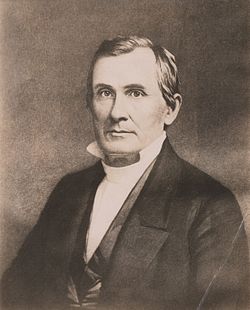
I am not actually sure when I first had to memorize Lincoln's Gettysburg Address.  But I do know that the older I get, the more I study, and the more I write, the more I appreciate it.  That being said, this isn't really a post about either Lincoln or the Address per se.  Rather it is more about  this guy:
the Reverend Doctor George Washington Junkin, and what he means both for Gettysburg as we commemorate the 150th anniversary of that battle and for the Mainline.
Junkin had an interesting life.  A native of Pennsylvania, he was an Old School Presbyterian minister turned president of three colleges/universities (Lafayette College, Miami of Ohio, and Washington College -- now Washington and Lee University), he watched as his school turned against both him personally and the nation he believed that God had divinely crafted in the form of the United States.  He and some of his family left Virginia shortly before the Civil War began, though not all of them.  Several relatives (including most famously his son-in-law, Thomas Jackson, and his daughter,  Margaret Junkin Preston -- who became known as the poetress of the Confederacy) rejected the Union he so loved, and threw their lot in with the Confederacy.

In the book I am currently working on, Junkin looms large, as much of it takes place in Lexington, Virginia at both Washington College and at the nearby Virginia Military Institute, where the Davidson family had strong ties.  In Junkin we get a glimpse of so much of the Mainline of the mid-nineteenth century, one that was dominated by the evangelical Protestant denominations of the Second Great Awakening (the Methodists, the Baptists, and the Presbyterians).  But we also get a glimpse at how fragmented that evangelicalism was.  All three of those denominations, the largest churches in the United States, split over the issue of slavery in the years before the Civil War.  In the case of the Presbyterians, they had already broken into two camps over other issues (though slavery played an increasing role), but had managed to largely stick together somewhat officially until nearly the very end.

When it came to slavery, Junkin and the Old School walked a very fine line.  Junkin himself owned slaves (after he moved to Virginia to take the Washington College job), had attacked abolitionists (while living in Ohio), but also supported the American Colonization Society.  Indeed, he probably got the job in Lexington, in part because the previous college president had become to vocal on his belief that slavery had led to economic stagnation in Virginia.  His branch of the Presbyterian denomination found no Biblical reason to believe slavery to be a sin, though most Northern Old Schoolers did believe it (like virtually any human institution) could lead to sin.  By the time of the Civil War, however the Southern component of the Old School was less and less likely to agree with their Northern counterparts, and indeed, would form their own denomination as war clouds began to gather.

What does this have to do with the Mainline of today?  Well, several things actually.  First, is that theological and doctrinal complexity (and sometimes gymnastics) are nothing new within the Mainline.  While we might talk of the "evangelical denominations" (and I surely do), there were very real difference between and among the Methodists, Baptists, and Presbyterians of Junkin's time.  They did not always agree with each other, internally or externally, and it would be surprising if the modern Mainline did as well.  Likewise, those differences mattered, and in someways drove membership and engagement that makes modern "consensus" efforts look meager in comparison.  They may not have always been right, but they also weren't always wrong on matters of faith either. Second, is that these denominations were fully engaged with both their nation and their national culture.  They were active in trying to shape it (whether in condemning slavery as a sin, working to keep the nation together, or -- even-- in trying to form a new nation in the Confederacy), much more than they were being shaped by it.  And they were calling their members to political action (in ways that would probably make modern Church/State separationists's heads spin).  Recent scholarship (such as the this) that in essence blames the rise of evangelicals and their engagement in politics on the slavery issue as the chief cause of the Civil War -- or else the inability for politicians to craft a compromise short of war misses the point that denominations were already engaged on both sides of the issue (and that evangelicals in England had helped end slavery there without a war).  Junkin's story also reminds us of one other thing, using political labels like "liberal" and "conservative" can be problematic.  Some recent scholarship (see here for an example) has argued that liberal Protestantism of the mid-nineteenth century gave birth to the liberal Protestantism of the early twentieth (and hence, to that of the twenty-first century as well), in large part because they had to reject Biblical literalism in order to condemn slavery.  But Northern Old School Presbyterians never doubted that slavery could lead to sin, even if it was mentioned in the Bible.  What they wrestled with was how to deal with the institution.  In short, there is much more complexity to their time, and to ours, than labels often have us believe.  And Junkin proved, as much as he was a man of his time, to be able to be "liberal" on some things, and "conservative" on others.  Indeed, it was his conservatism that made him into a Unionist--to the point that he shook the very soil of Virginia off his shoes and wiped it from his wagon wheels when he left the state.

As for Junkin and Gettysburg, after leaving Lexington in the spring of 1861, Junkin returned to Pennsylvania.  After the battle was over in 1863, the aged reverend made his way to Gettysburg, where he began ministering to the wounded and amongst the captured Confederates as well.  Among the prisoners, he discovered several former students, whom he astounded by pulling from one of his pockets a class list and talking about their course work and grades.  Surely this was a surreal moment.  Surely as well it was a reminder of what they (and the nation) had once been, and would one day be again.